



Text & Titles
Word Flip
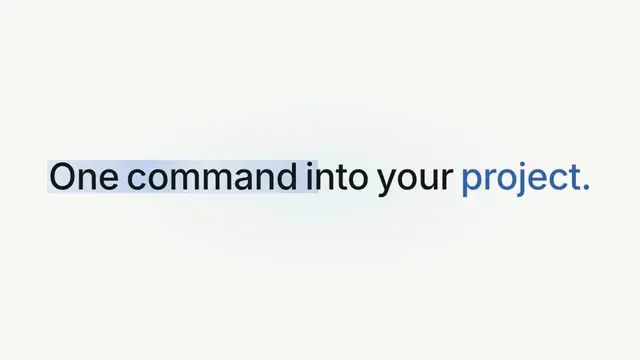
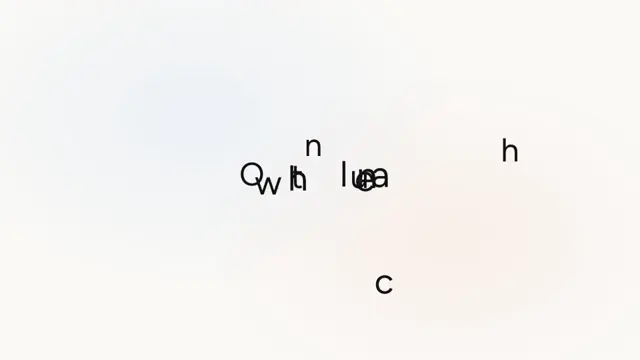
A headline types itself out, then one word cycles on a 3D flip — anticipation dip, motion-blurred throw, zero reflow
- Type
- Animation
- Duration
- 6.0s
- Category
- Text & Titles
- Source
- snapcn
Install
Installation
$ pnpm dlx shadcn@latest add @snapcn/word-flipNeeds an existing Remotion project and a components.json. Two-minute setup if this is your first snapcn component.
Component code
The exact file shadcn add copies into your project.
Usage
import { WordFlip } from "@/components/snap-cn/word-flip";

export function Hero() {
  return (
    <WordFlip
      prefix="Looking For A"
      words={["Modern", "Stunning", "Minimal"]}
      suffix="Portfolio"
    />
  );
}
How it moves
The sentence types itself a character at a time, holds for a beat, and then the word in the middle starts cycling. Four things happen in the nine frames of a flip, and they are all one gesture.
The slot is reserved before the first word exists
The whole point of this animation is that nothing except the word ever moves — no horizontal shift, no baseline shift, no reflow. That cannot be achieved by swapping text in and out of a line, because the words have different widths and the line would breathe every time one arrived.
So the slot is an inline-block whose width is the widest word's, fixed from the
first frame. While the sentence is still typing, the slot is simply empty — the
gap you see between "A" and "Portfolio" is the word's seat, waiting for it. Every
word is then uniformly scaled to fill that seat, which is why the widest word sits
at scale 1 and the rest are scaled up to meet it, and why both edges of the slot
are pinned no matter which word is showing.
Measured across the whole clip: the left edge of "Portfolio" moves 1px, and that 1px is the antialiasing on its own fade-in.
The word sinks before it flies
The flip does not start by lifting the word. It starts by dropping it about a tenth of an em — a backswing, the same thing a person does with their arm before they throw. It is what makes the flip read as weight instead of as a cut.
That is not a separate keyframe. One easeInBack progress drives the translate
and the rotation, and the curve's own overshoot is the dip: its minimum is
p = -0.100 at t = 0.42, so the dip is worth exactly a tenth of the exit travel
and lands a little under halfway through it.
The blur is a shutter, not a ramp
Blur is proportional to speed — easeInBackSpeed is the analytic derivative of
the curve above. It matters because the derivative is zero at the turnaround: at
the bottom of the dip the word has stopped to change direction, and it is sharp
there. Three frames later it is travelling as fast as it ever will, and it is
smeared. A blur keyed to progress instead of speed would blur the word while it is
standing still, which reads as a focus pull rather than motion.
The two words overlap
The incoming word starts before the outgoing one is gone (overlap, in frames), so
the swap is continuous rather than sequential. It arrives rotated -90° about its
baseline, a touch below where it belongs and a touch small, and unfurls into place
on a moderate decelerate — never an expo-out, which on a frame clock spends most of
its frames moving less than a pixel and reads as the word stopping dead partway up
and waiting.
Everything pivots on the baseline, and the baseline is measured, never derived from a line-height ratio. Pivot anywhere else and the glyph origins climb the pixel grid in whole-pixel jumps as the scale moves them — the word sits still, jumps, sits still.
Props
| Prop | Type | Default | Description |
|---|---|---|---|
prefix | string | "Looking For A" | Text before the flipping word. |
words | string[] | ["Modern", "Stunning", "Minimal"] | The words that cycle through the slot. |
suffix | string | "Portfolio" | Text after the flipping word. |
gradient | string[] | ["#2A8BF5", "#D382B0"] | Gradient painted on the flipping word, left to right. |
cps | number | 9 | Typing speed, characters per second. |
typeStart | number | 4 | Frames before the first keystroke. |
charFade | number | 6 | Frames each character takes to fade in. |
jitter | number | 0.18 | Keystroke unevenness, as a fraction of one keystroke. 0 is a metronome. |
pause | number | 6 | Frames held after the sentence completes, before the first flip. 6 frames is the 200ms beat. |
cycle | number | 35 | Frames from one flip to the next. |
exitDuration | number | 9 | Frames the outgoing word takes to leave. |
enterDuration | number | 9 | Frames the incoming word takes to settle. |
overlap | number | 3 | Frames the incoming word starts before the outgoing one is gone. |
caret | boolean | true | Blinking caret while typing. |
loop | boolean | true | Keep cycling the words forever. |
motion | Partial<WordFlipMotion> | see below | Distances, in em. |
perspective | number | 6.5 | 3D depth, in em. Smaller is a stronger perspective. |
fontFamily | string | app sans stack | The typeface. |
fontSize | number | 72 | |
color | string | theme.foreground | The static part of the sentence. |
theme | Partial<SnapCnTheme> | — | Design-system token overrides. |
mode | "light" | "dark" | "light" | Which end of the system to resolve against. |
fontWeight | number | 600 | |
speed | number | 1 |
motion
Every distance is in em, so the gesture scales with the type instead of being tied to one font size.
| Key | Default | Description |
|---|---|---|
exitY | -1.29 | How far the outgoing word is thrown. Negative is up. Its first tenth, inverted, is the dip. |
enterY | 0.135 | How far below rest the incoming word starts. |
rotate | 90 | Degrees about the baseline. |
scale | 0.98 | What the outgoing word shrinks to, and the incoming grows from. |
blur | 0.085 | Peak blur, reached at peak speed. |
Notes
- The sentence is one line and never wraps.
fontSizeis the knob: at the default 72 the reference sentence fills about 83% of a 1280-wide composition. carethas no effect on layout — it is a zero-width box with an absolutely positioned bar inside, so the sentence's geometry is identical with it and without it.- The words are measured once, behind
delayRender(), so frame 0 is never captured against the wrong slot width.
Frequently asked questions
How do I add Word Flip to a Remotion project?
Run npx shadcn@latest add @snapcn/word-flip. The source is copied into components/snap-cn/ (or wherever your components.json points) with anything it depends on, and you own the code from then on — there is no runtime package to keep installed.
What is Word Flip?
Word Flip is a Remotion 3D word flip animation for React. A headline types itself out, then one word cycles on a 3D flip — anticipation dip, motion-blurred throw, zero reflow.
What do I need before using Word Flip?
An existing Remotion project (npx create-video@latest) with a components.json. shadcn init does not recognise Remotion, so the installation guide has you write that file by hand — it takes two minutes. The component is MIT licensed and free.