












Captions
Karaoke Captions
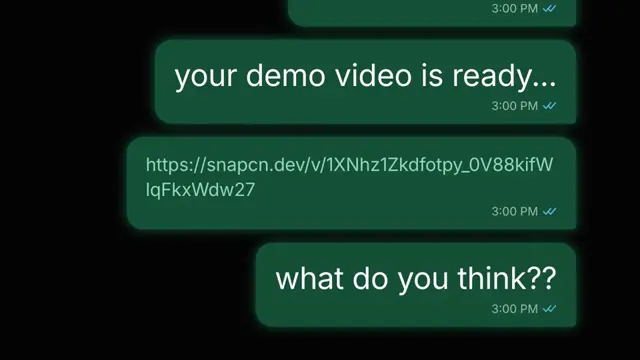
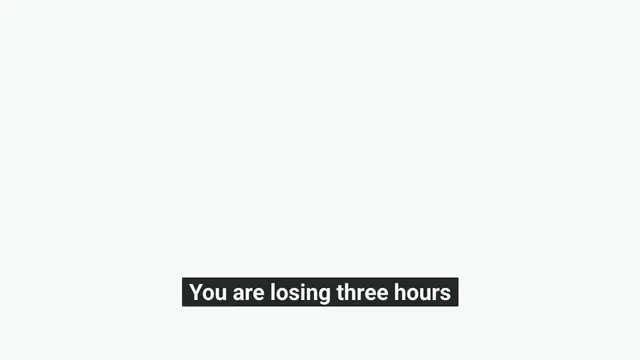
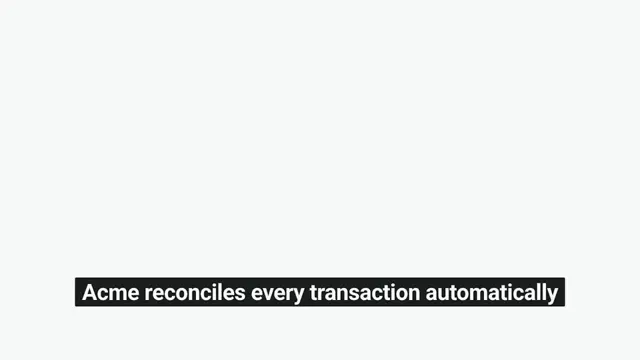
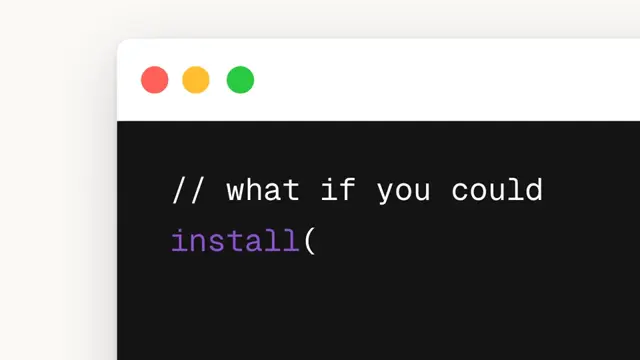
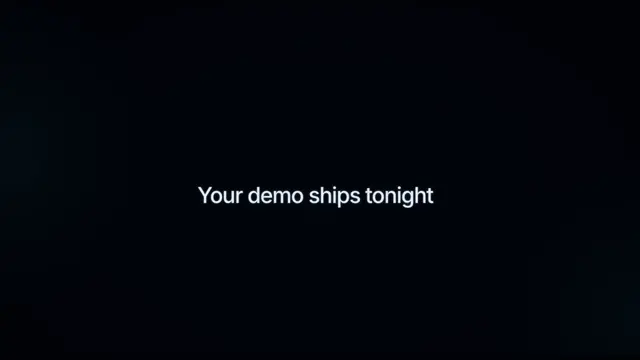
A caption line over any footage — the YouTube per-line black box by default, with karaoke fill, highlight-bar, and pill presets
- Type
- Animation
- Duration
- 5.0s
- Category
- Captions
- Source
- snapcn
Install
Installation
$ pnpm dlx shadcn@latest add @snapcn/karaoke-captionsNeeds an existing Remotion project and a components.json. Two-minute setup if this is your first snapcn component.
Component code
The exact file shadcn add copies into your project.
Usage
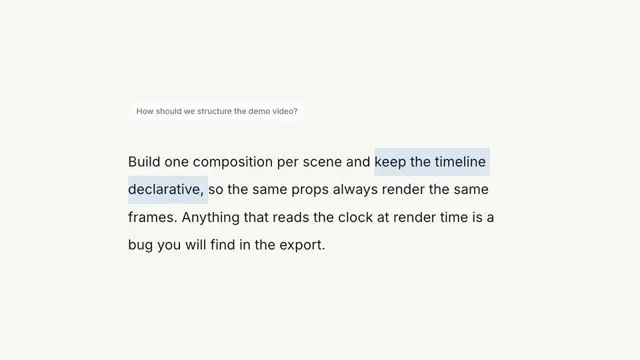
The whole line stays on screen while a color fill sweeps left-to-right across the
words to indicate speech progress — muted #667085 ramps to ink #101828 in the
light theme, and a translucent-white ramp resolves to #FAFAFA in the dark theme.
Emphasized words fill in the accent color and scale up subtly. Everything is driven
by the current frame, so scrubbing and rendering are fully deterministic.
// src/Root.tsx
import { Composition } from "remotion";
import { KaraokeCaptions } from "@/components/snap-cn/karaoke-captions";

const CaptionScene = () => (
  <KaraokeCaptions
    lines={[
      {
        text: "Acme reconciles every transaction automatically",
        startFrame: 10,
        endFrame: 120,
        emphasize: [4], // "automatically" in accent blue
      },
    ]}
    mode="light"
    aspect="landscape"
    pill
  />
);

export const RemotionRoot = () => (
  <Composition
    id="KaraokeCaptions"
    component={CaptionScene}
    durationInFrames={150}
    fps={30}
    width={1280}
    height={720}
  />
);
Without lines, the component builds a single demo line from text and
emphasize. For word-accurate karaoke timing (e.g. from a transcription API),
pass wordTimings — the absolute frame each word starts filling; a word's fill
ends when the next word begins, and the last word runs to endFrame:
<KaraokeCaptions
  lines={[
    {
      text: "Acme reconciles every transaction automatically",
      startFrame: 10,
      endFrame: 120,
      wordTimings: [10, 28, 52, 68, 92],
      emphasize: [4],
    },
  ]}
/>
The component renders with a transparent canvas (plus the optional pill surface), so place it over any footage or backdrop. Unlike word-by-word caption styles, the full line is always visible — the fill is what indicates progress.
Safe-area presets
The aspect prop positions the caption block clear of platform UI:
landscape— 16:9 videos; sits 8% from the bottom with 10% side margins.portrait— 9:16 (TikTok / Reels / Shorts); raised to 18% from the bottom to clear platform chrome, 7% side margins.square— 1:1 feeds; 10% from the bottom, 8% side margins.
Using a real transcript
Nobody has frame numbers. Your transcript is in milliseconds — the shape Whisper,
CapCut and Remotion's own @remotion/captions all speak:
<KaraokeCaptions
  captions={[
    { text: "Acme",        startMs: 1000, endMs: 1400 },
    { text: "reconciles",  startMs: 1400, endMs: 2000 },
    { text: "every",       startMs: 2000, endMs: 2300 },
    { text: "transaction", startMs: 2300, endMs: 3000 },
  ]}
  preset="karaoke"
/>
or paste an .srt straight in with srt={...}. Word-level output is collapsed into
LINES (consecutive words become one line, a pause starts a new one) — which is exactly
how a caption tool builds a line. Milliseconds are converted against
useVideoConfig().fps, so one transcript is correct at any frame rate.
What actually makes a caption look premium
Three things, and the first one is most of it.
1. An OUTSIDE outline
A caption has to stay legible over footage it has never seen — a face, a sky, a white desk. A heavy black outline is the only thing that does that, and it has to sit outside the letterform.
-webkit-text-stroke centres the stroke on the glyph outline, so half of it eats
inwards and the letters go thin and mushy. Measured on Montserrat 900 at 160px with a
14px stroke:
| white stem | |
|---|---|
| no stroke | 38px |
-webkit-text-stroke alone | 22px — the stroke eats 42% of the letterform |
+ paint-order: stroke fill | 38px — identical to no stroke |
WebkitTextStrokeWidth: `${stroke}px`,
WebkitTextStrokeColor: "#000",
paintOrder: "stroke fill",   // draw the stroke, THEN the fill over it
That one line is most of the difference between a caption and a cheap caption.
2. Weight and size
Montserrat 800–900, at 11–13% of the frame's short side. Not Inter at 700, and not
2.8% of the height — that is a subtitle. Load the face through @remotion/google-fonts
so the Player, the mp4 and your own project all get the same one.
3. The spoken word lands
A spring with overshoot, not an ease. And that scale is a scale on text, which is where captions usually fall apart: a browser gives glyph origins no vertical sub-pixel precision, so a scale that moves the baseline makes the word climb the pixel grid in whole-pixel jumps. The pop pivots on the measured baseline — verified on rendered frames, the baseline holds to 0px while the word scales 1.16×, so it grows upward off its baseline exactly like real caption type.
Props
| Prop | Type | Default | Description |
|---|---|---|---|
preset | "boxed" | "karaoke" | "highlight" | "clean" | "boxed" | boxed (default): the YouTube auto-caption — white Roboto on a solid per-line black box, no outline. karaoke: heavy outlined line, each word snapping from dimmed to full white as it is spoken. highlight: the spoken word rides a rounded accent bar. clean: the quiet pill, no outline |
strokeRatio | number | — | Outline width as a fraction of the font size. Defaults per preset. 0 turns it off |
strokeColor | string | "#000000" | Outline colour |
uppercase | boolean | — | Force upper case. Defaults per preset |
lines | CaptionLine[] | — | Timed lines: { text, startFrame, endFrame, wordTimings?: number[], emphasize?: number[] }. Omit to build a single line from text |
text | string | "Acme reconciles every transaction automatically" | Convenience single line used when lines is not provided |
emphasize | string | "automatically" | Comma-separated words of text to emphasize (case-insensitive, punctuation ignored). Only used with the text fallback |
mode | "light" | "dark" | "dark" | Which end of the design system to resolve tokens against |
theme | Partial<SnapCnTheme> | — | Design-system token overrides. Anything you leave out falls back to the shadcn defaults |
accentColor | string | theme.primary | Fill color of emphasized words |
fontSize | number | 48 | Font size in pixels |
fontWeight | number | 600 | CSS font-weight |
aspect | "landscape" | "portrait" | "square" | "landscape" | Safe-area preset positioning the caption block |
pill | boolean | true | Rounded surface behind the line with a hairline border |
emphasisScale | number | 1.04 | Scale emphasized words grow to as their fill completes (ease-out, no bounce) |
baseColor | string | — | Unfilled (not-yet-spoken) word color override |
fillColor | string | — | Filled (spoken) word color override |
speed | number | 1 | Global playback multiplier |
className | string | — | Optional className passed to the outer wrapper |
Frequently asked questions
How do I add Karaoke Captions to a Remotion project?
Run npx shadcn@latest add @snapcn/karaoke-captions. The source is copied into components/snap-cn/ (or wherever your components.json points) with anything it depends on, and you own the code from then on — there is no runtime package to keep installed.
What is Karaoke Captions?
Karaoke Captions is a Remotion karaoke captions for React. A caption line over any footage — the YouTube per-line black box by default, with karaoke fill, highlight-bar, and pill presets.
What do I need before using Karaoke Captions?
An existing Remotion project (npx create-video@latest) with a components.json. shadcn init does not recognise Remotion, so the installation guide has you write that file by hand — it takes two minutes. The component is MIT licensed and free.