







Screens & Devices
Screen Recording
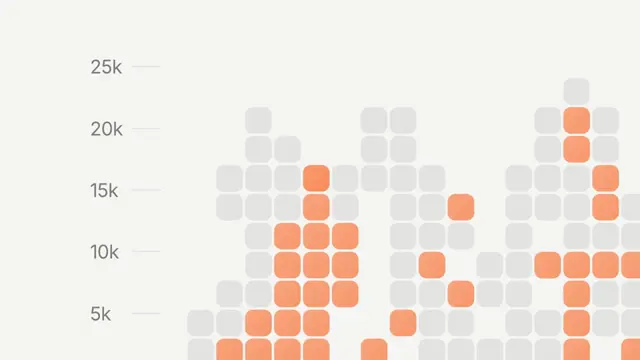
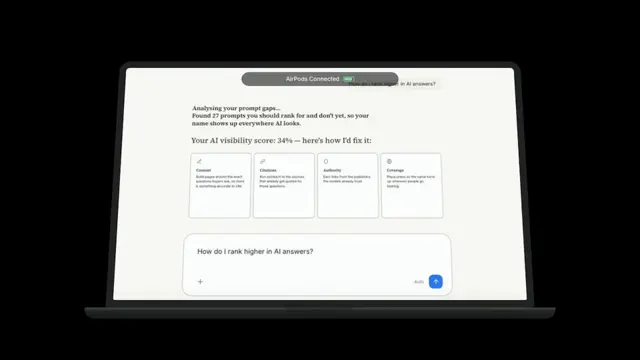
Crops the browser and OS chrome off a raw screen capture, fits what is left to the frame, and runs a keyframed camera that pushes in on whatever matters
- Type
- Animation
- Duration
- 4.6s
- Category
- Screens & Devices
- Source
- snapcn
Install
Installation
$ pnpm dlx shadcn@latest add @snapcn/screen-recordingNeeds an existing Remotion project and a components.json. Two-minute setup if this is your first snapcn component.
Component code
The exact file shadcn add copies into your project.
Usage
A raw capture is not a shot. This is the treatment that makes it one: crop the browser and OS chrome off each edge, fit what is left to the frame, and run a camera track that pushes in on the thing you are talking about and pulls back when you are done. Everything is a pure function of the current frame, so scrubbing and rendering agree.
// src/Root.tsx
import { Composition } from "remotion";
import { ScreenRecording } from "@/components/snap-cn/screen-recording";

const Demo = () => (
  <ScreenRecording
    src="/recordings/checkout.mp4"
    crop={{ top: 0.11 }}
    camera={[
      { at: 34, duration: 25, zoom: 1.6, x: 0.36, y: 0.42 },
      { at: 96, duration: 25, zoom: 1 },
    ]}
  />
);

export const RemotionRoot = () => (
  <Composition
    id="ScreenRecording"
    component={Demo}
    durationInFrames={139}
    fps={30}
    width={1280}
    height={720}
  />
);
src takes an image or a video — a .mp4/.webm/.mov/.m4v plays through
<OffthreadVideo>, anything else through <Img>, and both take the same camera
track, so a single screenshot works. Root-relative paths are served by Next in the
Player and rewritten through staticFile() in a render; http(s)/data URLs pass
through.
Cropping the chrome
crop is fractions of an edge, never pixels — { top: 0.11 } drops the top 11%,
which is about what a tab strip and address bar come to. Measure once on a still and
divide (chromePixels / recordingHeight); the same numbers then survive a re-record
at a different resolution.
Give sourceAspect (width ÷ height of the file, 1920x1080 → 1.778) and the crop
is exact on the raw file. Omit it and the source is aspect-filled to the composition
first, so the fractions are measured on the shot as it appears rather than on the
file. Identical whenever the two aspect ratios already match, which is the usual case —
but if you are dropping a 4:3 capture into a 16:9 composition, pass it.
The camera
A move eases from wherever the camera actually is at at to the pose named, over
duration frames, then holds until the next move's at. There is no hold field —
the hold is the gap. zoom is absolute (1 is the fitted shot), and omitting zoom,
x or y carries the previous value, which is what makes a pure pan one line. Moves
that overlap are truncated, never blended, so the camera stays continuous.
Focal points are clamped to what the current zoom can actually hold, so a pull-back
recentres itself instead of dragging a band of backdrop into frame. That clamp is
visible in the numbers: at zoom: 1.2, x: 0.95 resolves to 0.583 — the furthest
right the shot can go without showing its own edge. Zoom in more to reach further out.
Pass camera={[]} for a locked-off shot at zoom 1; a treated recording with no camera
is still the point of this component.
Composing
Emphasis is this component's own job. camera is the way a shot points at something: a
push to a focal point rides the footage by construction, because the transform is the
footage. Nothing is layered over it, so nothing can drift off it.
<ScreenRecording
  src="/recordings/checkout.mp4"
  crop={{ top: 0.11 }}
  camera={[
    { at: 30, duration: 25, zoom: 1.8, x: 0.4, y: 0.3 },
    { at: 90, duration: 25, zoom: 1 },
  ]}
/>
The camera transform lives entirely inside this component, so anything wrapping it —
cursor-track, a caption — is unaffected and reads in plain frame coordinates. That
is a feature and a trap at once: a wrapper does not ride the camera, so a cursor over a
push-in visibly detaches from the UI it is clicking. Keyframe the wrapper too, or give that
beat camera={[]}.
Everything is laid out as a fraction of the box the component is mounted in, not of the
composition, so a recording drops into laptop-frame or phone-frame's children and
fills the screen. The one exception is sourceAspect, which is compared against the
composition's aspect — inside a device frame, omit it and let the source aspect-fill.
speed does not propagate through a stack — pass the same value to every layer.
When not to use this
When the recording already is the shot. If your capture is a clean, cropped, well-paced
window and the camera never moves, this component earns nothing over an <OffthreadVideo>
of your own — and it will not fix a bad take. It also has no chrome="browser" preset,
deliberately: a fraction that guesses an unknown recording's chrome is wrong more often
than it is right, and a wrong crop is a shot with a sliver of tab bar in it.
Props
| Prop | Type | Default | Description |
|---|---|---|---|
src | string | — | Required. Video (.mp4/.webm/.mov/.m4v → OffthreadVideo) or image; root-relative, http(s) or data URL |
crop | ScreenCrop | {} | Chrome to cut away, as a fraction of each edge — { top, right, bottom, left } |
cropTop / cropRight / cropBottom / cropLeft | number | — | The four edges of crop, flat. Set here, an edge overrides the same edge of crop |
sourceAspect | number | — | Width ÷ height of the source file. Give it and crop is exact on the file; omit it and crop is measured on the fitted shot |
fit | "cover" | "contain" | "cover" | cover fills the frame and centre-crops the long axis; contain fits the whole region and pads with backdropColor |
backdropColor | string | theme.background | Padding behind a contain fit |
camera | CameraMove[] | DEMO_CAMERA | Camera track in at order — { at, duration?, zoom?, x?, y? }. Pass [] for a locked-off shot |
radius | number | 0 | Corner radius on the treated shot, in px. Only makes sense when the recording is inset in something else |
trimBefore | number | 0 | Frames to skip into the source video before frame 0 — cut dead air without re-exporting. Ignored for images |
audio | boolean | false | Play the recording's own audio |
entrance | "fade" | "none" | "fade" | fade is the same 18-frame fade-and-unblur laptop-frame and phone-frame run on screen media, so nesting does not double up |
speed | number | 1 | Time multiplier. Every camera at is measured against frame × speed; layers do not inherit it |
className | string | — | Optional className passed to the outer wrapper |
theme | Partial<SnapCnTheme> | — | Design-system token overrides. Anything you leave out falls back to the shadcn defaults |
mode | "light" | "dark" | — | Which end of the design system to resolve tokens against |
Frequently asked questions
How do I add Screen Recording to a Remotion project?
Run npx shadcn@latest add @snapcn/screen-recording. The source is copied into components/snap-cn/ (or wherever your components.json points) with anything it depends on, and you own the code from then on — there is no runtime package to keep installed.
What is Screen Recording?
Screen Recording is a Remotion screen recording zoom for React. Crops the browser and OS chrome off a raw screen capture, fits what is left to the frame, and runs a keyframed camera that pushes in on whatever matters.
What do I need before using Screen Recording?
An existing Remotion project (npx create-video@latest) with a components.json. shadcn init does not recognise Remotion, so the installation guide has you write that file by hand — it takes two minutes. The component is MIT licensed and free.